Wild Plants Used for Medicine and Food
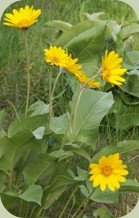
Learning wild plants used for medicine, food, and tools is also known as the study of ethnobotany (how people utilize plants). Edible and medicinal plants can provide healthy alternatives to highly processed foods and pharmaceuticals, bringing greater health into our lives.
To effectively use wild plants, one must learn basic plant identification skills, especially for poisonous plants, as well as ethics, proper collection and preparation methods.
This section of the online library provides articles on wild plants used for medicine, food, and utilitarian purposes. Articles often include references to excellent books, resources, and classes. We hope you enjoy these resources that can help you discover ways to bring wild plants into your life.
You can peruse the articles below and/or sign up to the
Alderleaf eNewsletter
to get updates on new articles.
Articles on Wild Plants Used for Medicine & Food:
Wild Edible Plants: Benefits, Hazards, and Major Groups
We are surrounded by wild plants used for medicine and food everyday.
Here are some important consideration for getting started with wild
edibles...
(read more)
Coniferous Forest Plants in the Pacific Northwest
Coniferous forest plants are a unique and beautiful part of our world’s
biodiversity. They provide food, medicine, wildlife habitat, and
materials for tools...
(read more)
Plants That Repel Mosquitoes
There are a variety of both wild and cultivated plants that repel
mosquitoes. Almost anywhere you go, it is reasonable to find several
plant species that you can use to ward off these pesky critters.
(read more)
Pacific Bleeding Heart Plants
Pacific bleeding heart plants are found throughout the moist lowland
coniferous forests of the Pacific Northwest. It is a delicate,
low-growing beauty, also known as the western bleeding heart.
(read more)
Red Huckleberry Plants: A Valuable Northwest Native
Red huckleberry plants are abundant in the northwest. These delicate
translucent berries have been a source of food for generations of
Northwest natives, animals and people alike.
(read more)
Medicinal Uses of Elderberry Plants
Blue and red elderberry plants have been used for generations by the
native people of the Pacific Northwest as both powerful medicine and
vitamin-packed food supplements.
(read more)
Wild Strawberry Plants: The Sweetest Little Gift of the Forest
Though smaller than the cultivated garden varieties, their flavor and
sweetness is unmatched. Wild strawberries are rich in vitamins A and C,
as well as high in iron, potassium and calcium.
(read more)
Five Temperate Rainforest Plants to Know in the Pacific Northwest
Temperate rainforest plants used for medicine, food, or made into tools.
The following wild plants are some of the most useful species in the
Pacific Northwest.
(read more)
List of Medicinal Plants in the Temperate Rainforest
A thorough listing of wild plants used for medicine found on the west
side of the Cascade Mountains and nearby habitats of the Pacific
Northwest.
(read more)
Identifying Wild Mushrooms
There is nothing quite like the feeling of coming upon a strange and
wonderful mushroom on a walk or wander! For many of us the next step is
mushroom identification...
(read more)
Medicinal Herb Gardening Using Permaculture Techniques
Medicinal herb gardening is a wonderful way to begin incorporating
permaculture into your life. Growing plants used for medicine allows you
experiment with small-scale sustainable gardening...
(read more)
List of Deer Resistant Plants
When working with nature in gardening or landscaping it is often helpful
to know which plants to consider when deer are a potential concern.
Deer can eat a variety...
(read more)
Edible Weeds: A Different Perspective
Everywhere you walk, you are probably surrounded by wild edible weeds.
These plants likely have among them some great edible as well as
medicinal species. It is truly amazing...
(read more)
Blackberry Plants : One of the Tastiest Wild Fruits
One of the tastiest of all wild fruits grows on the vines of blackberry
plants. It is a well-known and well loved plant found throughout the
United States. Humans have...
(read more)
Fiddlehead Ferns
Of all the wild edible plants, fiddlehead ferns are some of the most
unique and flavorful. Fiddleheads are the unfurled new leaves of a
fern. They vary in size, shape and palatability from...
(read more)
Edible Berries
The most delicious treats to be found foraging in the wild, edible
berries are a delight to find and to eat! There is a wealth of wild
edible berries throughout North America, and a great number of them
grow...
(read more).
Edible Wild Mushrooms
Do you want to learn how to find and identify edible wild mushrooms?
Learning about edible wild mushrooms can seem like an overwhelming
process, but don’t get discouraged...
(read more).
Poisonous Mushrooms
Some poisonous mushrooms can kill you! It is essential to learn to
identify the poisonous mushrooms properly and avoid them carefully. The
good news is that...
(read more)
Types of Evergreen Trees
How can you tell the different types of evergreen trees apart and which
ones are your best allies in a survival situation? Where are they found
and what do they look like...
(read more)
Tree Identification
Do you need help with tree identification? Tree identification is most
easily done if you look at the parts of a tree in front of you, and
using them, look up the tree in a ...
(read more)
Tincture Recipes: Making Home Remedies
Looking for some great tincture recipes to help you heal and stay
healthy? For starters, tincture is typically an alcoholic extract of
plants used for medicine...
(read more).
Plant Identification: A Practical Approach
Plant identification in the field can be a challenge. Learn about a
simple, straightforward system for identifying plants used at many of
Alderleaf's courses... (read more)
Herbal Cold Remedy from Wild Plants
Learn how to make your own herbal cold remedy from wild harvested local
plants used for medicine. Cedar fronds combined with roots or inner bark of the Oregon
grape make a powerful herbal cold remedy... (read more)
Floating Pond Plants: For Habitat, Food and Beauty
Learn
what plants to bring to your ponds for food, beauty and wildlife
habitat. Unlike emergent pond plants the floating pond plants, serve a
completely different and yet necessary role in your pond...(read more)
Types of Mushrooms: For Medicine and Permaculture
Mushrooms
are a rich source of both foods and medicines. Read about what
mushrooms you can use as medicine and the enhance your garden or other
permaculture projects...(read more)
Water Hemlock: A Deadly Poisonous Plant
When
you begin learning about wild plants, a great place to start is with
the most dangerous species found in your area. Learn to recognizes and
how to avoid this highly toxic member of the Carrot family... (read more)
Antifungal Herbs: Healing Allies
A variety of truly wonderful antifungal herbs are used by herbalists to help treat different ailments...(read more)
How to Grow Blueberries
Learning how to grow blueberries is simple and they can provide a unique addition to our diet... (read more)
Herbs for Allergies: Common Allies
Utilizing herbs for allergies can be an effective way to lessen and to treat allergic symptoms... (read more)
Plants in the Desert: Living Survival Aids
There
are many plants in the desert that can serve as vital aids in
wilderness survival. Some serve as a source of food, some as material
for shelters and others serve as the perfect material for friction
fires...(read more)
Pacific Northwest Trees
Pacific
northwest trees are one of the most important resources to survival,
providing firewood, shelter, tools, food, medicine, wildlife habitat,
and so much more to the ecosystem...(read more)
Urban Foraging: Eat Your Weeds
The practice of urban foraging can help benefit you and your family during times of emergency...(read more)
Natural Cold Remedies
Here's the recipe for one of our favorite natural cold remedies that uses ingredients found in your kitchen and backyard...(read more)
Chantrelle Mushrooms: Gifts of the Forest
Chantrelle
mushrooms – which are also called “chanterelles” – are one of the most
harvested and most widely enjoyed wild mushrooms in the world...(read more)
How to Make a Tincture
Learning
how to make a tinctures is a great way to preserve and use medicinal
plants, however they do not replace the nourishment you gain from eating
wild foods...(read more)
How to Make Cottonwood Salve
Cottonwood salve is an amazing medicine made of natural ingredients, read more to learn how to make it...
(read more)
Antiviral Herbs
Are
you familiar with any antiviral herbs? You’ve probably heard the terms
antiviral, antibacterial and antimicrobial. Learn more hear about
antiviral herbs...(read more)
Nettle Infusions
Do
you know the health benefits of using nettle infusions? Nutritionally
speaking, nettle infusions are high in iron, potassium, calcium,
manganese and vitamins A, C and D...(read more)
Wild Edible Greens
Some of the most delicious wild foods are wild edible greens. These wild foods are typically more strongly flavored and far more nutritious for us than their domestic counterparts...(read more)
Foraging for Wild Edibles
Have you ever been curious about foraging for wild edibles? There are
many ways to go about it, and some are certainly more effective and
enjoyable than others...(read more)
Edible Wildflowers: Identification, Harvesting, Examples, & Cautions
Spring and summer provide us with the
opportunity to build an in-depth relationship with the various plant
communities in our respective bioregions... (read more)
Lobster Mushroom
This mushroom might be one of the strangest organisms people like to eat! This bizarre fungus goes by the Latin name Hypomyces lactifluorum, and earns its name from its scent and flavor...(read more)
Edible Seaweeds
Edible Seaweeds are one of the sensory delights of the living seashore.
With their fantastic shapes, colors and tastes they are quite an
experience for the adventurous palate and a valuable
survival food...(read more)
Morel Mushrooms
Morel mushrooms are an elusive, exciting and distinctly delicious group of wild mushrooms. Learn to identify the choice edibles from the potentially deadly toxic look-alikes...(read more)
King Bolete
The king bolete is a large, charismatic wild mushroom with a distinct appearance and incredible flavor. Its flavor is particularly delicious - rich, earthy, nutty, and complex...(read more)
Cattail Plants - Friend of the Forager, Bushcrafter, and Basket-Maker
Learn how to identify cattail, which parts are edible at what time of year, how to use it for survival purposes, PLUS step-by-step instructions on how to make a plaited cattail basket...(read more)
Stinging Nettle Plants
Most people in the Pacific Northwest are familiar with stinging nettle (Urtica dioica). Nettle has a long history of human use as fiber, food, and medicine; and figures prominently in both...(read more)
Common Burdock
Burdock has spread across North America over the last three centuries. It holds many roles in the contemporary world: invasive weed, permaculture plant, medicine, and food...(read more)
Medicinal Plants List
Learn about ten common plants used for medicine in North America - great species to get to know as a starting point towards making your own remedies...(read more)
Nettle for Hair
Herbalists use stinging nettle for hair and other scalp-related issues. Learn how to make your own nettle remedies for hair...(read more)
How to Make Maple Syrup
Learn about the tools and steps of how to make maple syrup - an exciting sustainable living skill...(read more)
Common Camas
Common camas is a versatile plant with a long history of use by native people throughout the northwestern United States...(read more)
How to Dry Herbs
Learn the different techniques for drying herbs (flowers, leaves, seeds, roots, and bark) so that you can use them year-round...(read more)
Wild Mushroom Recipes
Here are some great wild mushroom recipes to take your wild delicacies to a new level of culinary delight...(read more)
Birch Beer Recipe
Birch beer is an excellent beverage that can be made at home. Similar to root beer, it has a unique flavor that many consider a gourmet food...(read more)
Stinging Nettle Pesto Recipe
This stinging nettle pesto recipe is a tasty way to get started with adding wild foraged foods to your diet...(read more)
Stinging Nettle Beer Recipe
Learn how to turn wild-foraged stinging nettle plants into a tasty tonic with this nettle beer recipe...(read more)
Mushroom Identification Tips
Learn mushroom identification skills that are key to opening up the world of wild mushrooms for food and medicine...(read more)
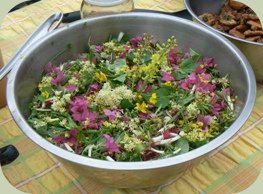
Salad made from wild flowers and greens
Additional Resources on Plants Used for Medicine and Food:
Learn about Wild Edible & Medicinal Plants Courses at Alderleaf
Plants Used for Medicine and Food on Methow Valley Herbs
Return from Plants Used for Medicine & Food Articles to the Home Page
Is The Essential Wilderness Survival Skills Course Right for You? Take the "Online Survival Training Readiness" Quiz
See for yourself if this eye-opening course is a good fit for you. It takes just a few minutes! Get your Survival Training Readiness Score Now!
Grow Your Outdoor Skills! Get monthly updates on new wilderness skills, upcoming courses, and special opportunities. Join the free Alderleaf eNews and as a welcome gift you'll get a copy of our Mini Survival Guide.

 The Six Keys to Survival: Get a free copy of our survival mini-guide and monthly tips!
Learn more
Wait. Before you leave...
Don't forget your Survival Mini Guide.
It's free.
Be more prepared for your next outdoor adventure! Discover six essential survival skills. Join our newsletter and get a free copy of the guide as a welcome gift!
Your privacy is our top priority. We promise to keep your email safe!