Blackberry Plants - One of the Tastiest Wild Fruits
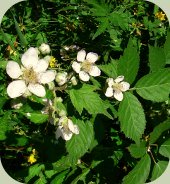
Blackberry plants are one of the tastiest of all wild fruits growing on vines. It is a well-known and well loved plant found throughout the United States. Humans have had a good relationship with these plants for hundreds, perhaps thousands of years. Here are some things you might want to know about blackberry plants…
Blackberry Plants Versus Raspberry Plants
How do you tell raspberries and blackberries apart? Here are a few things that can help:
- Blackberries are generally purple to black, raspberries are generally red (except for blackcap)
- Raspberry fruits are hollow, blackberry fruits are solid inside
- Salmonberry is in the same genus, Rubus, as raspberries and blackberries
- Salmonberries are also hollow like raspberries
- The stems (canes) of raspberries are always round, blackberry canes have flattened surfaces or planes
How do you know it's a blackberry?
Blackberry's are distinct from other similar plants in several ways:
- They have 5-petaled white to pinkish flowers, the flowers give them away as being in the rose family
- The berry is actually a collection of tiny berries stuck together in a clump known as an aggregate fruit
- Blackberries have 3 to 7 leaflets that radiate from a central point, called a palmately compound leaf
- Wild blackberries have thorns all over their stems, some species also have thorns on the underside of their leaflets
- The fruits ripen summer to early fall, flower in the spring to early summer
Be More Prepared For Your Next Outdoor Adventure!
Don't leave home without knowing these six essential survival skills. Our free survival mini guide reveals the strategies of:
- Shelter & fire to prevent the number one cause of death
- Obtaining clean water to avoid life-threatening dehydration
- Common wild survival foods and other critical skills!

Uses of Blackberries
The blackberries have many uses, not just limited to the fruits themselves. The leaves can be dried completely and used as a tea. The plants can be used as hedges along property boundaries. The fruits of course are delicious in many forms including jams, preserves, in or on pancakes, muffins, breads, ice cream or frozen yogurts, and many other edible treats. Native peoples in various parts of North America once managed the landscape in favor of blackberries, using fire to keep areas open and create the disturbed habitat edges where blackberries thrive.
By the way, when you're out foraging, it's important to know how to stay safe in the outdoors, especially if you were to get lost. Right now you can get a free copy of our mini survival guide here, where you'll discover six key strategies for outdoor emergencies, plus often-overlooked survival tips.
Resources:
For more information check out some local field guides or take some edible plant classes.
- Newcomb's Wildflower Guide by Newcomb (provides a great, simple identification system)
- Plants of the Pacific Northwest Coast by Pojar and McKinnon (is one of the best plant guides for the Northwest)
- Discovering Wild Plants by Schofield (provides excellent information on harvesting, preparing, and recipes for wild plants)
For more information on the care of blackberries check out Arbor Day's blackberry page.
Learn more about wild edible and medicinal plants at our Plants Courses.

About the Author: Filip Tkaczyk is a periodic guest teacher at Alderleaf. He also wrote the field guide Tracks & Sign of Reptiles & Amphibians. Learn more about Filip Tkaczyk.
Return from Blackberry Plants back to Wild Plants Articles
Is The Essential Wilderness Survival Skills Course Right for You? Take the "Online Survival Training Readiness" Quiz
See for yourself if this eye-opening course is a good fit for you. It takes just a few minutes! Get your Survival Training Readiness Score Now!
Grow Your Outdoor Skills! Get monthly updates on new wilderness skills, upcoming courses, and special opportunities. Join the free Alderleaf eNews and as a welcome gift you'll get a copy of our Mini Survival Guide.
 The Six Keys to Survival: Get a free copy of our survival mini-guide and monthly tips!
Learn more
Wait. Before you leave...
Don't forget your Survival Mini Guide.
It's free.
Be more prepared for your next outdoor adventure! Discover six essential survival skills. Join our newsletter and get a free copy of the guide as a welcome gift!
Your privacy is our top priority. We promise to keep your email safe!